For one night, Passione Vino is putting its Italian pride aside. On Wednesday 7th October, our private room hands its keys to Daniel Manetti — a man who has spent more than a decade sourcing and tasting some of the rarest wines on earth — for the first chapter of a new series we’re calling The French Invasion. Six legendary Bordeaux, opened and poured around one table, alongside the best charcuterie and cheese we can find.
Before the night itself, here’s what you should know about the man behind the bottles, the region we’re celebrating, and exactly what will be in your glass.
Buy Tickets HERE
Meet Daniel Manetti
Daniel grew up in Fucecchio, in the Tuscan hills near Florence, learning to love wine the old way — helping his grandfather tend a hectare of vines that made bottles for family and friends, nothing more. That early education took him a long way from home.
He started at The Dorchester, then, in 2013, took a leap most people wouldn’t: he left a full-time role for a part-time post as assistant sommelier at Hélène Darroze at The Connaught. Less salary, more hours — but it changed everything.
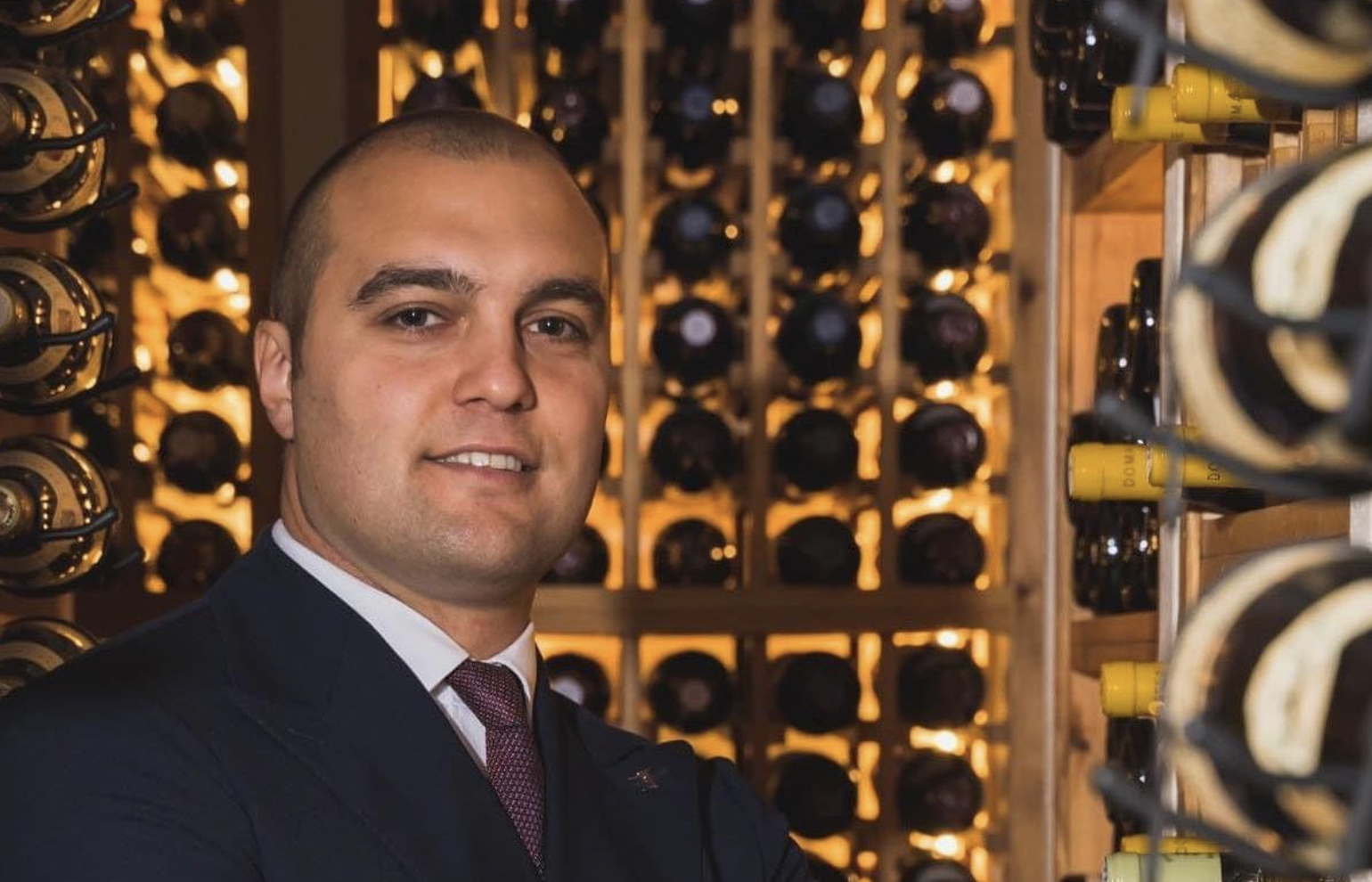
Over the following decade, he rose from Assistant Sommelier to Head Sommelier, Wine Director, Group Wine Buyer, and finally Global Wine Director of the Maybourne Hotel Group, building what is widely regarded as one of the most extraordinary wine collections in the world — a cellar holding some 30,000 bottles on site, with 200,000 more in reserve.
The scale of what he built still gets told as legend in the trade: it once took Daniel three years to source a single bottle of Château Cheval Blanc 1947 for The Connaught’s list. It sold, ten days after landing, for £35,500.
He also holds a degree in Managerial Finance from the LSE and a qualification in Supply Chain Strategy from INSEAD, and is currently studying data analytics applied to the wine trade — because for Daniel, knowing a great bottle is only half the job.
Long before any of this, Passione Vino was already supplying wine to The Connaught, where Daniel was quietly assembling that cellar. That’s where he and Luca first crossed paths — two people equally obsessed with wine. The friendship outlasted the business relationship, and it’s the reason this event exists at all.
Daniel has since gone out on his own, founding OmniaWine — a consultancy built entirely around this kind of access: rare bottles, private collections, and unique experiences.
The French Invasion is that access, brought to our table.
A Little Context: Understanding Bordeaux
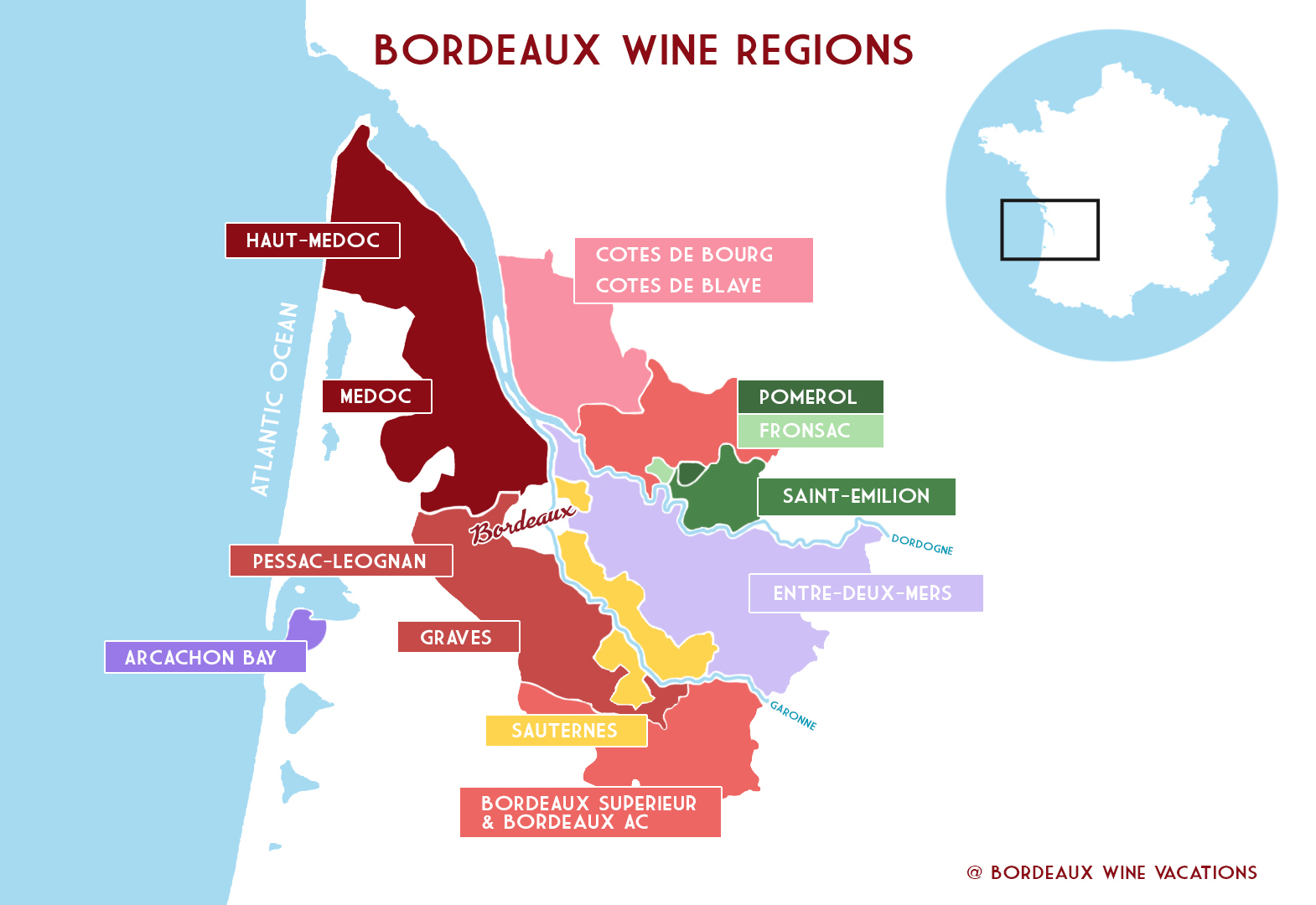
Bordeaux isn't one wine region — it's several, split by a river and governed by a ranking system nearly two centuries old.
In 1855, Emperor Napoleon III asked Bordeaux’s wine brokers to rank the region’s best estates for the Exposition Universelle in Paris. They ordered 61 châteaux — almost entirely from the Médoc, on the Left Bank — into five tiers, or “Growths,” based on the price their wines commanded at the time. It has barely changed since: the only amendment in 167 years came in 1973, when Château Mouton Rothschild was promoted from Second to First Growth.
At the top sit the five First Growths: Lafite Rothschild, Latour, Margaux, Mouton Rothschild, and Haut-Brion — the only one of the five from Graves rather than the Médoc.
The Right Bank plays by different rules. Saint-Émilion was never part of the 1855 ranking; it has its own classification, revised roughly every decade, topped by “Premier Grand Cru Classé A” — a tier Château Cheval Blanc has held since the system began. Pomerol, next door, has never been officially classified at all. Its icons — Petrus, Trotanoy, Le Pin — earned their status purely on reputation and the price collectors are willing to pay.
And then there's Sauternes and Barsac, classified separately in 1855 too, with one estate sitting alone above every other: Château d'Yquem, in a category of its own — Premier Cru Supérieur.
Buy Tickets HERE
The Six Wines You'll Taste
Five appellations. Three First Growths. One category of one. This is about as complete a picture of great Bordeaux as a single table can hold.
Château Latour 2011 — Pauillac, First Growth
The most powerful of the First Growths — Cabernet Sauvignon-driven, built on gravel soils by the river, structured to age for decades. 2011 shows the estate’s grip and precision, drinking beautifully today.
Château Margaux 2006 Margaux, First Growth
Where Latour is power, Margaux is perfume — the most fragrant and silken of the First Growths. 2006 is a classically elegant vintage from the commune, all violets, cedar and fine-grained tannin.
Château Haut-Brion 1998 – Pessac-Léognan, First Growth
The only First Growth outside the Médoc, and Bordeaux’s oldest great estate. 1998 was a standout vintage for Graves, and this bottle carries Haut-Brion’s signature: warm gravel, tobacco and smoke beneath the fruit.
Château Cheval Blanc 2012 – – Saint-Émilion, Premier Grand Cru Classé A
Saint-Émilion’s most coveted address, and unusually for Bordeaux, built on Cabernet Franc as much as Merlot. Opulent, velvety, and singular — no other Bordeaux tastes quite like Cheval Blanc.
Château Trotanoy 2010 — Pomerol, unclassified but iconic
Pomerol’s quiet giant — smaller and less famous than neighbouring Petrus, but adored by those who know. 2010 is one of the great modern Bordeaux vintages, and this Merlot-dominant wine is dense, plush and deeply savoury.
Château d’Yquem 2020 — Sauternes, Premier Cru Supérieur
The greatest sweet wine on earth, and Bordeaux’s only Premier Cru Supérieur — a class of one. Botrytised Sémillon and Sauvignon Blanc, honeyed and bright with acidity. We’re closing with it alongside a good blue cheese, not dessert — trust us.
Buy Tickets HERE

